GS 2: GovernanceGS 2: PolityPrelimsGS 2: Government policies and interventions for development in various sectorsGS 2: Important Aspects of Governance, Transparency and Accountability
In India, A Hard Limit for X’s Transparency Pledge, Pg12
X's transparency pledge on government censorship orders clashes with India's IT Act, mandating strict confidentiality on content blocking requests.
Practice MCQs
790 Students attempted
Key Highlights:
- X announced a new policy on August 15, stating that any government-mandated content censorship would be made "clearly visible" to users, including the agency and legal grounds.
- India's Ministry of Electronics and Information Technology (MeitY) responded on August 18, asserting that X must comply with Indian laws, specifically highlighting the confidentiality of orders issued under Section 69A of the Information Technology Act, 2000.
- The core conflict lies with Rule 16 of the Information Technology (Procedure and Safeguards for Blocking for Access of Information by Public) Rules, 2009, which mandates strict confidentiality for all content blocking requests and actions.
- Non-compliance with Section 69A can lead to criminal liability, including imprisonment up to seven years, for intermediaries and their resident officers.
- Content takedown orders under Section 69A surged from approximately 6,000 annually through 2023 to about 24,300 in 2025.
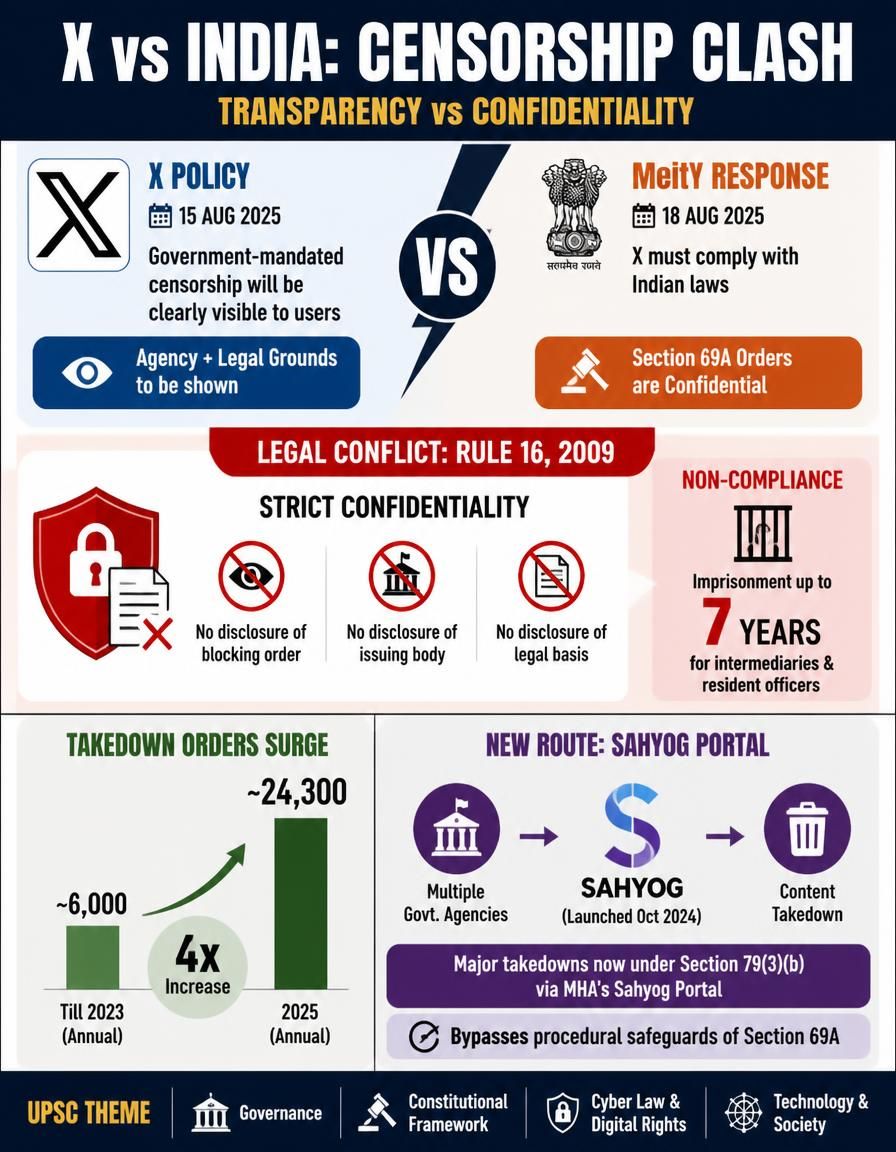
X vs India.jpg
Detailed Insights:
- X's proposed transparency directly contradicts Rule 16, which prohibits disclosing the existence of a blocking order, the issuing body, or its basis.
- The current mechanism on X, "Under the Hood," shows users internal flags like spam or reach restrictions, but not government blocking requests under Section 69A.
- A significant portion of content takedowns in India now occur under Section 79(3)(b) of the IT Act, often routed through the Ministry of Home Affairs (MHA)'s Sahyog portal.
- The Sahyog portal, launched in October 2024, streamlines content takedown notices from various government agencies, bypassing the procedural safeguards of Section 69A.
- X has challenged the Sahyog portal in court, but the Karnataka High Court dismissed its petition in September 2025, calling the portal an "instrument of public good."
- Despite its "free-speech absolutist" stance, X has historically complied with 83% to 99% of government demands, including blocking accounts like Reuters in July 2025.
Key Concepts Involved:
- Section 69A of the IT Act, 2000: Empowers the Central Government to block public access to online information in the interest of national security, public order, and other specified grounds.
- Rule 16 of the IT (Blocking) Rules, 2009: Mandates strict confidentiality regarding all requests and actions taken for blocking online content under Section 69A.
- Section 79(3)(b) of the IT Act: States that an intermediary loses its immunity from liability if it fails to expeditiously remove unlawful content after being notified by the government.
- Intermediary: Any person who receives, stores, or transmits electronic records on behalf of another, including social media platforms, ISPs, and search engines.

SuperKalam is your personal mentor for UPSC preparation, guiding you at every step of the exam journey.
Download the App


STUDY RESOURCES
CONTACT US
ⓒ Snapstack Technologies Private Limited