GS 2: GovernanceGS 3: Environment & EcologyPrelimsGS 3: Conservation, Pollution and DegradationGS 2: Government policies and interventions for development in various sectors
Deadly Span, Pg6
India's vultures face severe electrocution threat from expanding power infrastructure, compounding diclofenac-induced declines and impacting ecosystem health, demanding urgent protective measures.
Practice MCQs
790 Students attempted
Key Highlights:
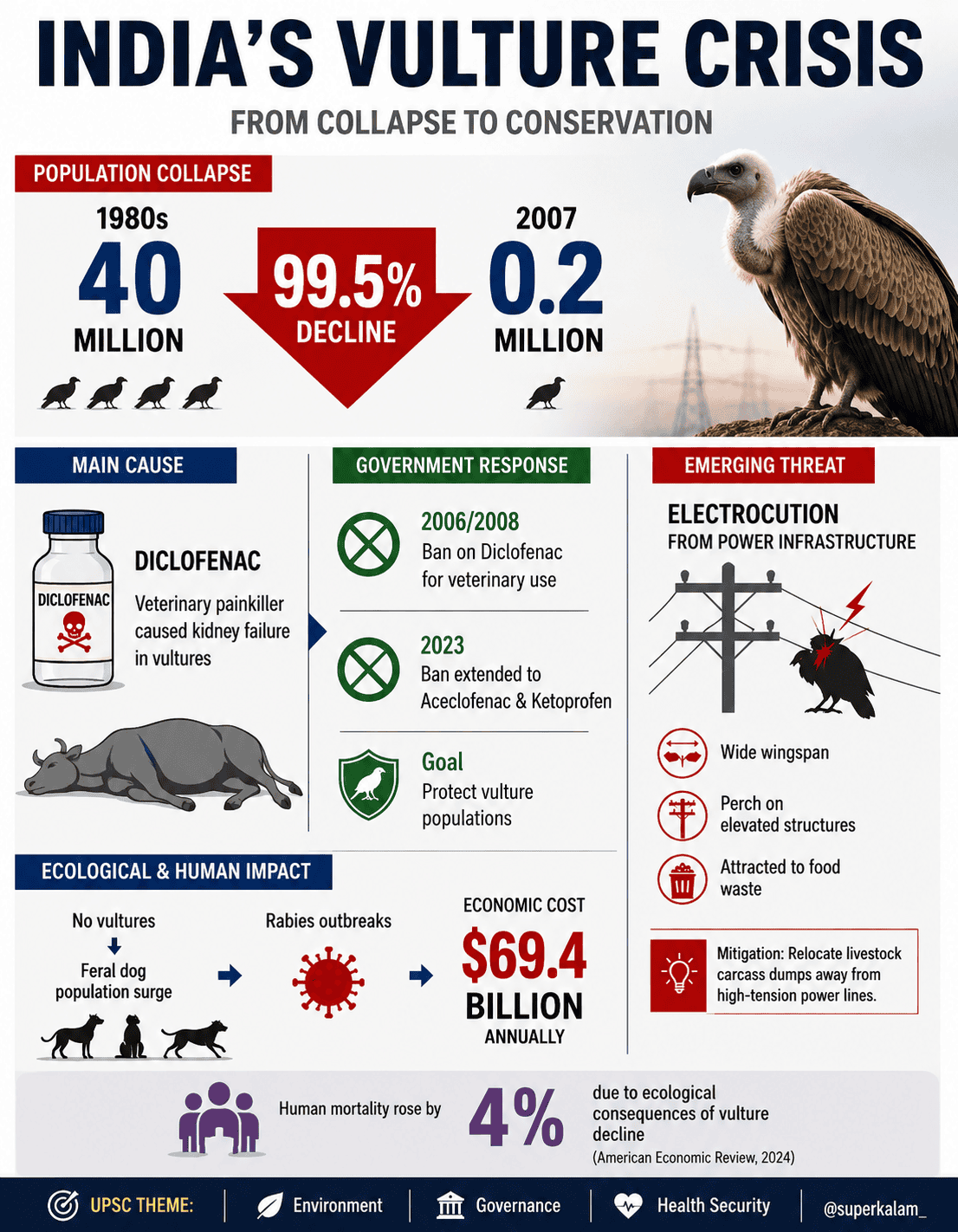
- India's vulture population experienced a catastrophic decline of 99.5% by 2007, down from an estimated 40 million in the 1980s.
- The primary cause of this decline was the veterinary painkiller diclofenac, which caused kidney failure in vultures feeding on treated cattle carcasses.
- The Indian government banned diclofenac for veterinary use in 2006/2008 and extended bans to aceclofenac and ketoprofen in 2023 to protect vultures.
- An emerging threat to the fragile vulture population is electrocution from India's expanding power infrastructure.
- The absence of vultures led to a surge in feral dog populations, resulting in increased rabies outbreaks and an estimated annual economic cost of $69.4 billion.
Vulture Crisis.jpg
Detailed Insights:
- The population crash severely impacted white-rumped, Indian, and slender-billed vultures.
- A 2024 study in the American Economic Review estimated that human mortality rose by 4% due to the ecological consequences of vulture decline.
- Vultures are particularly vulnerable to electrocution due to their wide wingspans, habit of perching on elevated structures, and attraction to food waste near electrical installations.
- A study in the Journal of Threatened Taxa suggested that relocating livestock carcass dumps away from high-tension power infrastructure could mitigate electrocution risks.
- An assessment for the State Climate Resilient Power System Development Project noted that electrocution incidents also occur on medium-voltage lines, not just high-voltage ones.
- Avian electrocution is likely under-documented in India as dead birds can be removed by humans or scavengers.
- Solutions to prevent electrocution include insulating conductors, increasing the gap between energized and grounded components, and installing safe perches.
Key Concepts Involved:
- Non-Steroidal Anti-Inflammatory Drugs (NSAIDs): A class of drugs used to reduce pain and inflammation, some of which are highly toxic to vultures.
- Diclofenac: A specific NSAID that caused widespread kidney failure and death in vultures, leading to its ban for veterinary use.
- Avian Electrocution: The death of birds caused by contact with energized electrical power lines or equipment.
- Visceral Gout: A pathological condition in birds, often a symptom of NSAID poisoning, characterized by the deposition of uric acid crystals on internal organs.

SuperKalam is your personal mentor for UPSC preparation, guiding you at every step of the exam journey.
Download the App


STUDY RESOURCES
CONTACT US
ⓒ Snapstack Technologies Private Limited